
Anxiety can affect both your mind and body. When you feel anxious, you may experience rapid breathing, a racing heartbeat, muscle tension, restlessness, excessive worrying, or difficulty concentrating. These feelings can become overwhelming, especially during stressful situations. One simple way to manage these moments is by practicing breathing exercises for anxiety.
Breathing exercises are relaxation techniques that help you become more aware of your breathing and develop a slower, more comfortable breathing pattern. They can be practiced at home, at work, before bedtime, or whenever you need a moment to calm yourself. Unlike many other relaxation activities, breathing exercises do not require special equipment or a dedicated space.
Yoga also places significant importance on breathing through a practice known as Pranayama. Different breathing techniques can help you develop breath awareness, improve concentration, and support relaxation.
Whether you are dealing with everyday stress, nervousness, or occasional anxiety, incorporating gentle breathing exercises into your routine may help you feel more in control.
In this article, we will explore the best breathing exercises for anxiety, how to practice them step by step, their potential benefits, and important precautions to follow.
(Also Read: Shambhavi Mahamudra: The Power Of Lord Shiva)
What Are Breathing Exercises for Anxiety?
Breathing exercises for stress and anxiety are controlled or mindful breathing techniques designed to help calm the body and mind during stressful situations.
When you experience anxiety, your body may activate its natural fight-or-flight response. This can cause your breathing to become faster or shallower, along with other physical changes such as increased heart rate and muscle tension.
Breathing exercises encourage you to pay attention to your breath and gradually develop a comfortable breathing rhythm.
Some common breathing techniques include:
- Diaphragmatic or belly breathing
- Box breathing
- 4-7-8 breathing
- Pursed-lip breathing
- Alternate nostril breathing
- Equal breathing
- Resonant or slow-paced breathing
- Mindful breathing
- Humming bee breath (Bhramari Pranayama)
- Three-part yogic breathing
These techniques differ in their breathing patterns and methods. You do not need to practice all of them. Start with one simple exercise and choose a technique that feels comfortable.
How Do Breathing Exercises Help with Anxiety?
Breathing is closely connected to the body’s nervous system, which regulates many automatic functions, including heart rate, breathing patterns, and stress responses.
During stressful situations, breathing may become rapid and shallow. This can sometimes make physical anxiety sensations more noticeable.
Slow, comfortable breathing can help you interrupt this pattern and shift your attention away from stressful thoughts.
Here is how breathing exercises may help:
- Encourage relaxation: Slow breathing can support the body’s relaxation response.
- Improve breath awareness: Paying attention to your breathing helps you recognize when you are breathing rapidly or holding your breath.
- Reduce physical tension: Combining breathing with mindful attention may help relax tense muscles.
- Support emotional regulation: Focusing on your breath can provide a moment to pause before reacting to stressful situations.
- Improve concentration: Mindful breathing gives your attention a simple and consistent focus.
Research suggests that some relaxation techniques and breathing practices may help manage stress and anxiety symptoms. However, results vary, and breathing exercises should be considered a supportive self-care practice rather than a standalone treatment for understanding anxiety disorders.
10 Best Breathing Exercises for Anxiety
Different breathing exercises work for different people. Some focus on extending the exhalation, while others use counting, alternate nostril breathing, or mindful observation.
Here are ten breathing exercises you can try to manage everyday stress and anxiety.
1. Diaphragmatic Breathing (Belly Breathing):
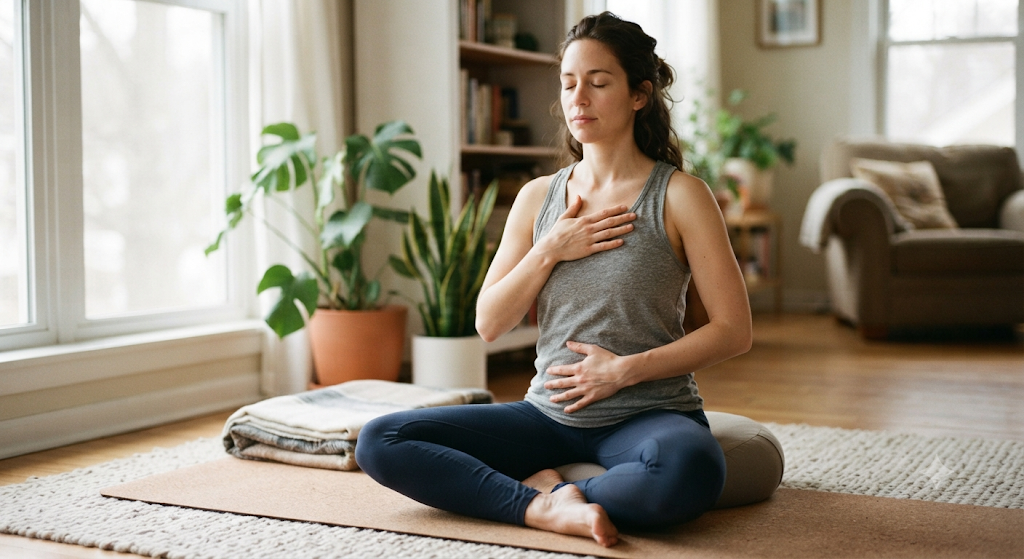
Diaphragmatic breathing exercises, also known as belly breathing or abdominal breathing, is one of the most useful techniques for beginners.
It involves using the diaphragm, the main muscle involved in breathing, while allowing the abdomen to expand naturally during inhalation.
This technique encourages comfortable, controlled breathing and can help you become more aware of your breathing pattern.
How to Practice Diaphragmatic Breathing:
- Sit comfortably in a chair or lie down on your back.
- Place one hand on your chest and the other on your abdomen.
- Relax your shoulders and jaw.
- Slowly inhale through your nose.
- Notice your abdomen expanding more than your chest.
- Exhale gently through your mouth or nose.
- Allow your abdomen to fall naturally.
- Continue breathing comfortably for a few minutes.
Duration: 3–5 minutes.
Benefits:
- Encourages comfortable breathing.
- Improves awareness of breathing patterns.
- May help reduce stress and physical tension.
- Provides a simple relaxation technique for beginners.
Best for: Beginners, everyday stress, and people who want to develop better breathing awareness.
2. Box Breathing (Four-Square Breathing)
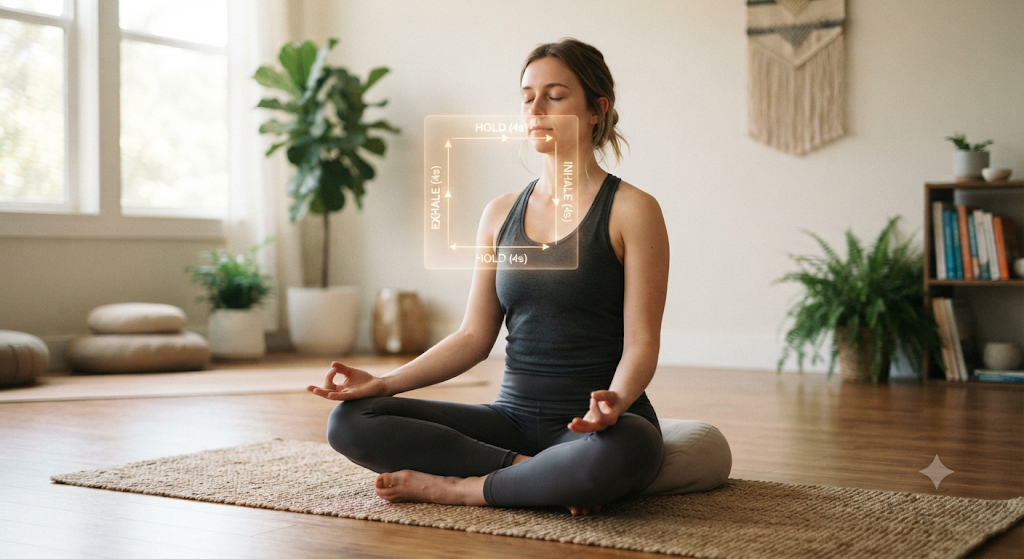
Box breathing is a structured breathing technique that uses four equal phases: inhaling, holding, exhaling, and holding again.
It is sometimes called four-square breathing because each phase follows the same counting pattern.
How to Practice Box Breathing:
- Sit upright in a comfortable position.
- Relax your shoulders and keep your body supported.
- Inhale gently through your nose for four counts.
- Hold your breath comfortably for four counts.
- Exhale slowly for four counts.
- Pause for four counts before inhaling again.
- Repeat the cycle a few times.
Duration: 1–3 minutes initially.
Benefits:
- Provides a structured breathing pattern.
- Encourages concentration.
- Helps redirect attention from stressful thoughts.
- Can be practiced during everyday stressful situations.
Best for: People who prefer structured exercises and counting-based breathing.
Beginner Tip: Breath-holding is not necessary for relaxation. If holding your breath makes you uncomfortable or increases anxiety, skip the pauses and practice gentle, continuous breathing instead.
3. 4-7-8 Breathing Technique
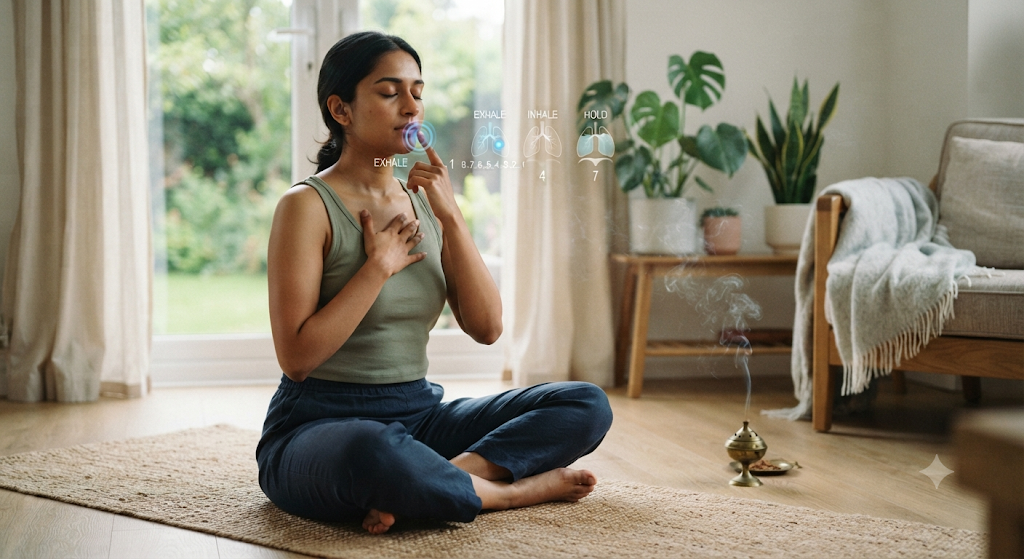
The 4-7-8 breathing technique is a structured relaxation exercise involving a four-count inhalation, seven-count breath hold, and eight-count exhalation.
It is commonly used as a relaxation practice, particularly before bedtime.
How to Practice 4-7-8 Breathing:
- Sit comfortably with your back supported.
- Relax your face, shoulders, and neck.
- Inhale gently through your nose for four counts.
- Hold your breath for seven counts, only if comfortable.
- Exhale slowly through your mouth for eight counts.
- Repeat for three or four cycles if comfortable.
Duration: Approximately 1–2 minutes.
Benefits:
- Encourages controlled breathing.
- Provides a structured relaxation exercise.
- Helps shift attention toward breathing.
- Can be included in an evening relaxation routine.
Best for: People who enjoy counting-based breathing exercises.
Precaution: The long breath hold and exhalation may feel uncomfortable for some beginners. Do not force the counts. If you experience dizziness, breathlessness, or increased anxiety, stop and return to normal breathing.
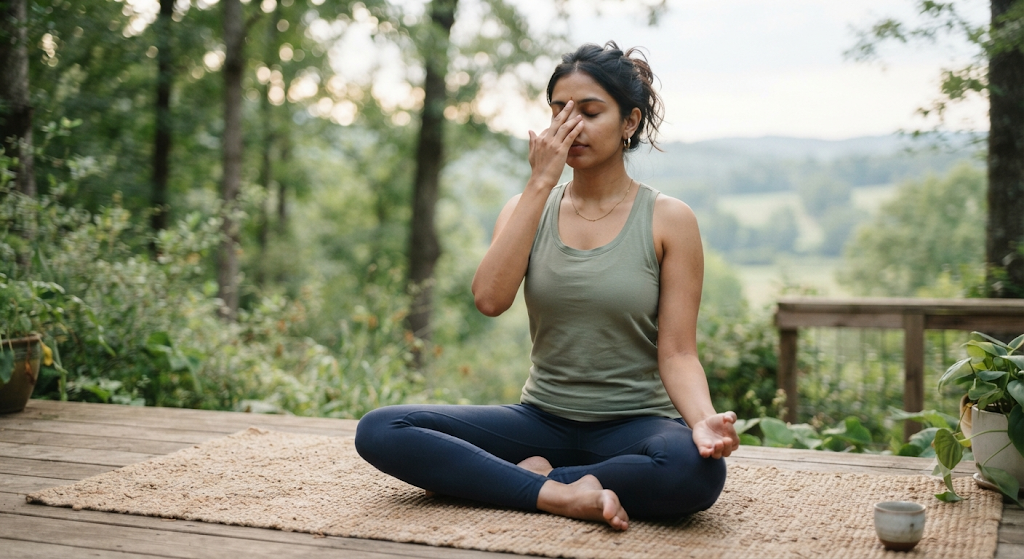
4. Alternate Nostril Breathing (Nadi Shodhana Pranayama)
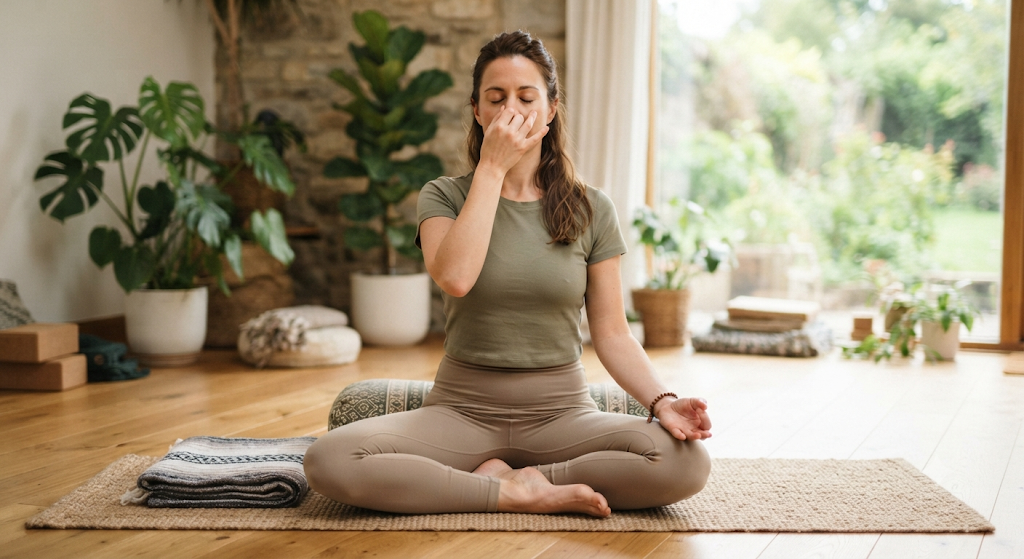
Nadi Shodhana is a traditional yogic breathing practice involving alternating inhalation and exhalation through the nostrils.
It is commonly practiced in yoga to develop concentration, breath awareness, and relaxation.
How to Practice Nadi Shodhana:
- Sit comfortably with your spine upright.
- Relax your shoulders and facial muscles.
- Rest your left hand on your knee.
- Use your right thumb to gently close your right nostril.
- Inhale slowly through your left nostril.
- Close your left nostril using your ring finger and release your right nostril.
- Exhale through your right nostril.
- Inhale through your right nostril.
- Close the right nostril and release the left.
- Exhale through your left nostril.
This completes one round.
Duration: Practice 5–10 rounds without forcing the breath.
Benefits:
- Encourages controlled breathing.
- Develops concentration and breath awareness.
- Provides a mindful yoga-based relaxation practice.
- May help create a calmer mental state.
Best for: Yoga practitioners and beginners who prefer gentle Pranayama exercises.
Precaution: Practice without breath retention initially. If your nose is blocked or you feel uncomfortable, choose another technique.
5. Pursed-Lip Breathing
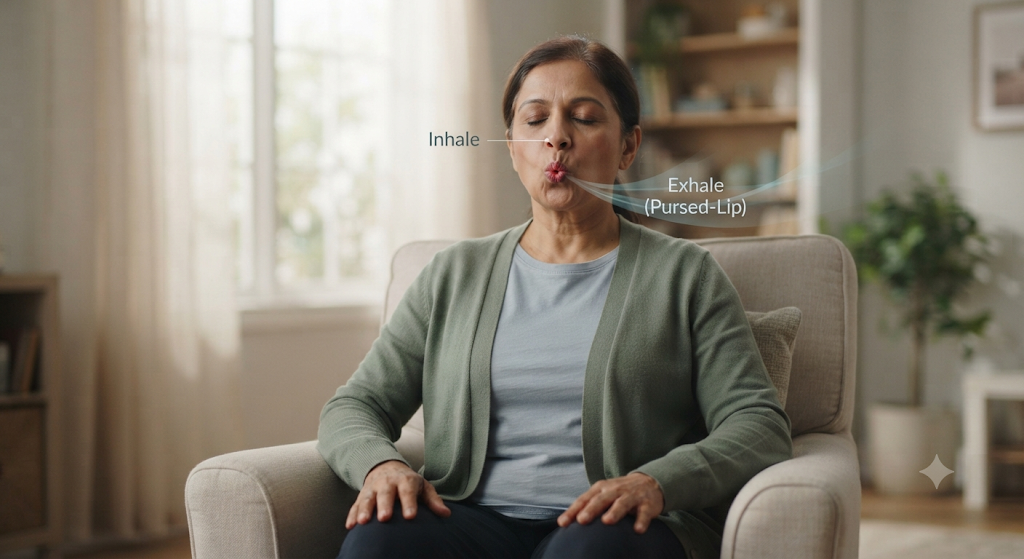
Pursed-lip breathing is a simple technique in which you inhale through your nose and exhale slowly through gently pursed lips.
It helps slow the rate of breathing and is commonly taught in respiratory care. It can also be used as a gentle breathing-control exercise.
How to Practice Pursed-Lip Breathing:
- Sit comfortably and relax your shoulders.
- Keep your mouth closed and inhale gently through your nose.
- Purse your lips as if you are about to whistle.
- Slowly exhale through your pursed lips.
- Allow the exhalation to last slightly longer than the inhalation.
- Repeat without forcing the air out.
Duration: 2–5 minutes.
Benefits:
- Encourages slower breathing.
- Helps develop breath control.
- Provides a simple technique during moments of breathlessness.
- Can help people become more aware of their breathing rhythm.
Best for: People who want a straightforward breathing exercise that can be practiced almost anywhere.
6. Equal Breathing (Sama Vritti Pranayama)
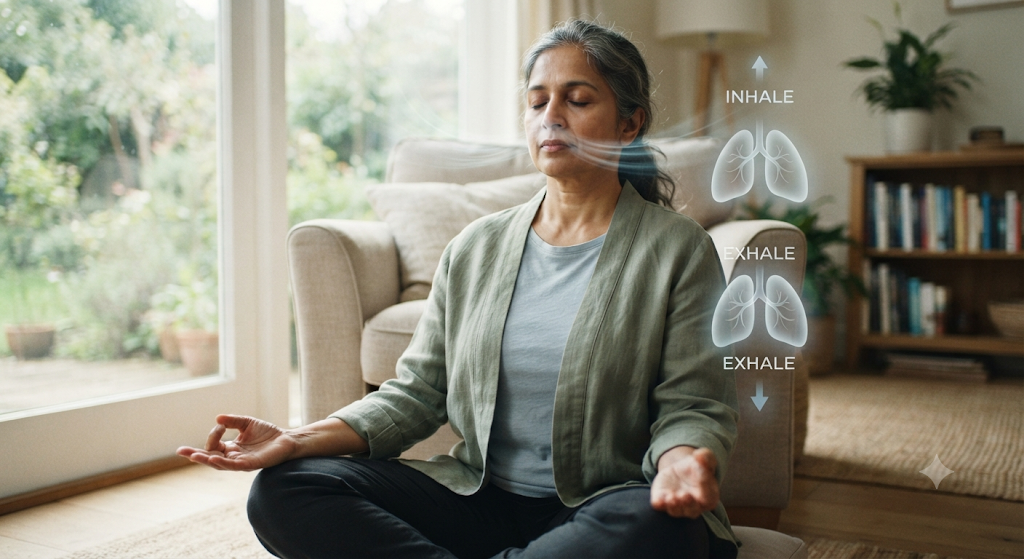
Equal breathing, traditionally associated with Sama Vritti Pranayama, involves keeping inhalation and exhalation approximately equal in duration.
It is a simple technique that encourages a steady breathing rhythm without requiring complicated movements.
How to Practice Equal Breathing:
- Sit comfortably with your spine upright.
- Close your eyes or soften your gaze.
- Inhale gently through your nose for four counts.
- Exhale through your nose for four counts.
- Maintain the same comfortable rhythm.
- Continue for several rounds.
- Gradually return to natural breathing.
Duration: 3–5 minutes.
Benefits:
- Encourages rhythmic breathing.
- Improves breath awareness.
- Provides a simple focus for meditation.
- Can be included in a daily yoga routine.
Best for: Beginners who want a simple and balanced breathing exercise.
7. Bhramari Pranayama (Humming Bee Breath)
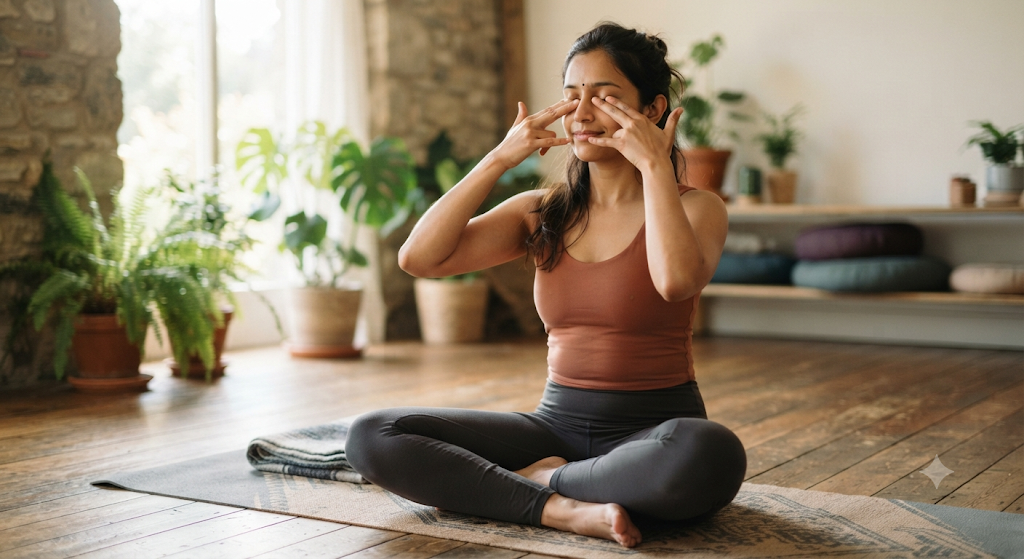
Bhramari Pranayama is a traditional yogic breathing technique in which you produce a gentle humming sound while exhaling.
The name Bhramari comes from the Sanskrit word associated with a humming bee. The practice combines slow breathing with gentle vibration and focused attention.
How to Practice Bhramari Pranayama:
- Sit comfortably in a quiet place.
- Keep your spine upright and relax your shoulders.
- Close your eyes gently.
- Inhale comfortably through your nose.
- As you exhale, make a soft humming sound.
- Notice the gentle vibration around your face and head.
- Repeat for several comfortable rounds.
Duration: 5–7 rounds.
Benefits:
- Encourages slow and mindful exhalation.
- Helps develop concentration.
- Creates a calming sensory experience.
- Can be included in a gentle evening yoga routine.
Best for: People who enjoy sound-based breathing and meditation practices.
Precaution: Keep the humming soft. Avoid pressing your ears or applying force to your face. Stop if the sound or vibration causes discomfort.
8. Three-Part Yogic Breathing (Dirga Pranayama)
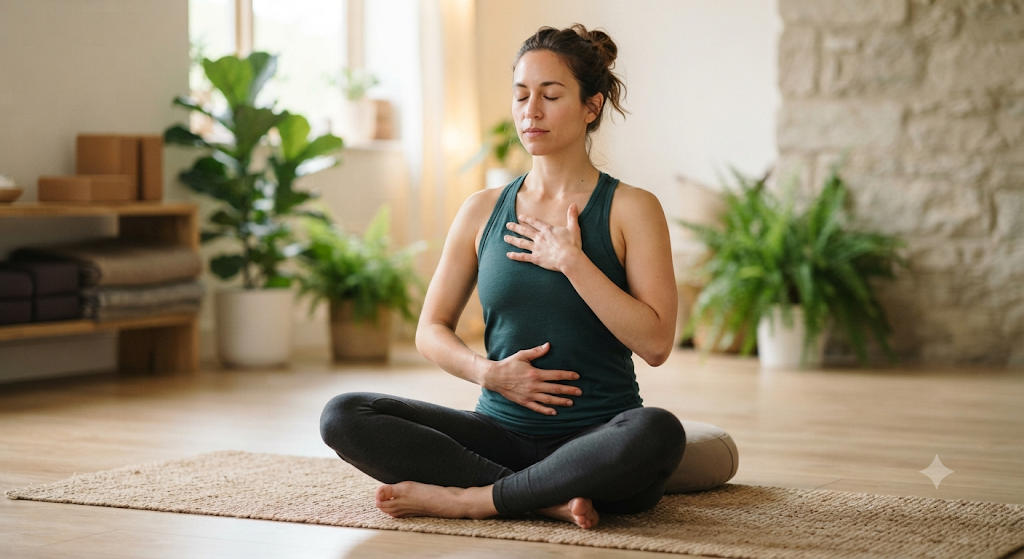
Three-part breathing, also known as Dirga Pranayama or complete yogic breathing, involves bringing awareness to the abdomen, rib cage, and upper chest.
It helps you observe different parts of your breathing movement without forcing your lungs to fill completely.
How to Practice Three-Part Breathing:
- Lie comfortably on your back or sit upright.
- Place one hand on your abdomen.
- Inhale gently and notice your abdomen expanding.
- Continue the inhalation comfortably while noticing your rib cage widening.
- Notice a small natural movement in your upper chest.
- Exhale gently, allowing the chest, ribs, and abdomen to relax.
- Repeat slowly and comfortably.
Duration: 3–5 minutes.
Benefits:
- Develops awareness of breathing movements.
- Encourages comfortable diaphragmatic breathing.
- Helps improve concentration.
- Supports a mindful yoga practice.
Best for: Yoga beginners who want to understand their natural breathing pattern.
9. Resonant Breathing (Slow-Paced Breathing)
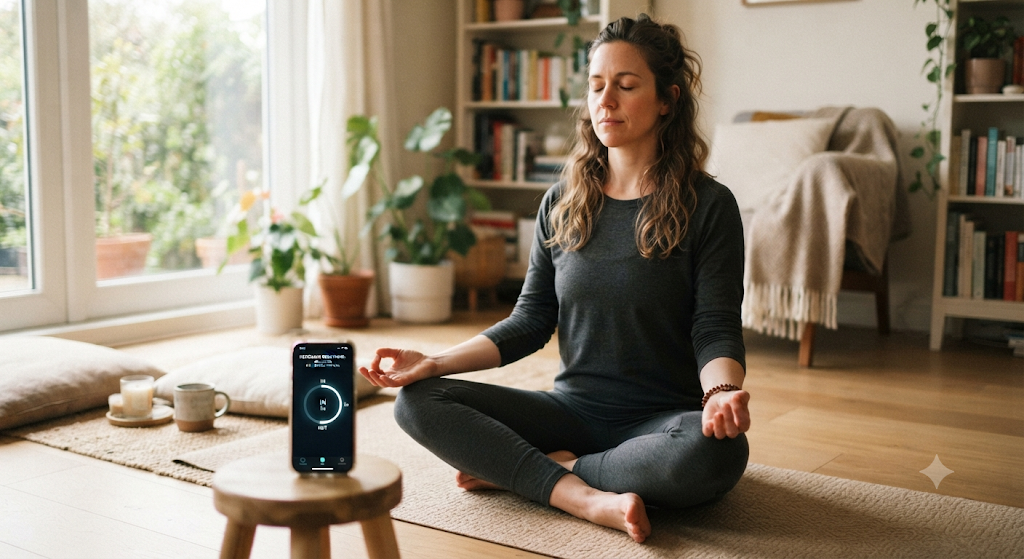
Resonant breathing is a slow-paced breathing technique that involves breathing at a comfortable, steady rhythm.
Some people practice around five to six breaths per minute, although the ideal rhythm varies between individuals.
How to Practice Resonant Breathing:
- Sit or lie down in a comfortable position.
- Relax your neck, shoulders, and abdomen.
- Inhale gently for approximately five seconds.
- Exhale comfortably for approximately five seconds.
- Continue without holding your breath.
- Adjust the timing if the rhythm feels uncomfortable.
- Return to normal breathing after a few minutes.
Duration: 3–5 minutes initially.
Benefits:
- Encourages slow and rhythmic breathing.
- Helps develop relaxation skills.
- Provides a consistent focus during stressful moments.
- May support emotional regulation.
Best for: People who enjoy gentle, continuous breathing without breath retention.
10. Mindful Breathing
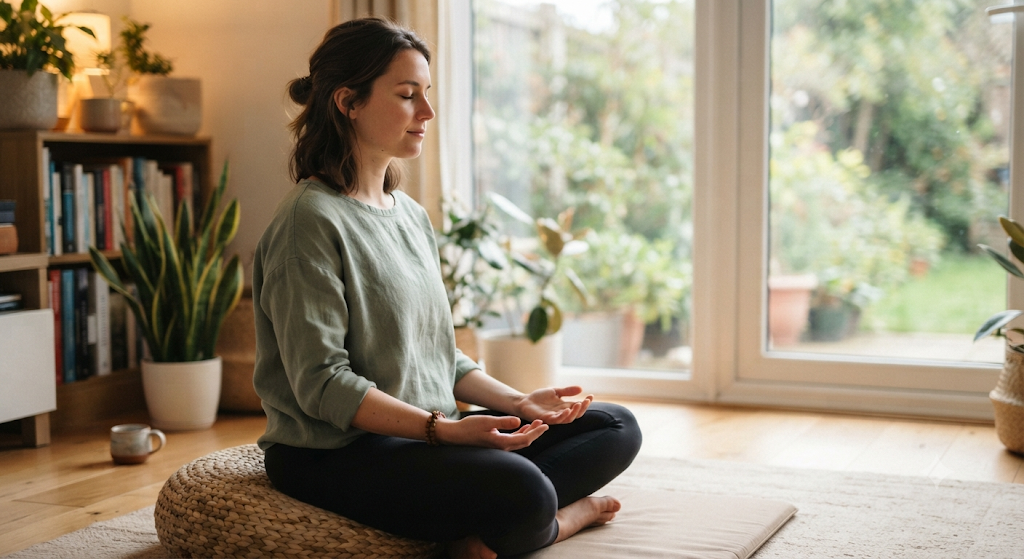
Mindful breathing is a meditation-based exercise that involves observing your natural breathing pattern without trying to change it.
It is particularly useful when anxiety is accompanied by excessive worrying or difficulty concentrating.
How to Practice Mindful Breathing:
- Find a quiet and comfortable place.
- Sit with your back supported.
- Close your eyes or look softly at a fixed point.
- Notice the air entering and leaving your nose.
- Observe the movement of your chest and abdomen.
- When thoughts appear, acknowledge them without judgment.
- Gently return your attention to your breathing.
- Continue for several minutes.
Duration: 5–10 minutes.
Benefits:
- Develops present-moment awareness.
- Encourages a non-judgmental attitude toward thoughts.
- Helps redirect attention from everyday worries.
- Can be practiced anywhere.
Best for: People who experience excessive thinking and want to combine breathing with mindfulness meditation.
(Also Read: Steps, Precaution And Benefits of Linga Mudra)
Best Breathing Exercise for Anxiety During a Panic Attack
A panic attack can cause intense fear and physical symptoms such as a racing heartbeat, sweating, trembling, chest tightness, dizziness, and rapid breathing.
During these moments, a simple and gentle breathing exercise may help you manage the experience.
However, remember that breathing exercises do not stop every panic attack, and new or severe physical symptoms should not automatically be assumed to be anxiety.
Gentle Breathing Exercise During a Panic Episode
- Move to a safe and comfortable place if possible.
- Sit down and support your back.
- Relax any tight clothing around your neck or chest.
- Let your shoulders drop naturally.
- Breathe gently through your nose if comfortable.
- Exhale slowly without pushing all the air out.
- Avoid taking repeated large or forceful breaths.
- Continue at a comfortable pace.
- If focusing on your breath increases panic, shift your attention to your surroundings.
You can also try the 5-4-3-2-1 grounding technique:
- Identify 5 things you can see.
- Identify 4 things you can physically feel.
- Identify 3 things you can hear.
- Identify 2 things you can smell.
- Identify 1 thing you can taste.
This exercise helps redirect your attention toward your immediate surroundings.
Important: Chest pain, severe breathing difficulty, fainting, or other new or concerning symptoms need prompt medical assessment. Do not assume they are caused by a panic attack.
5-Minute Breathing Routine for Anxiety
If you are new to breathing exercises, following a simple routine can make the practice easier.
You can use this five-minute routine in the morning, during a work break, or whenever you feel stressed.
| Time | Exercise | What to Do |
|---|---|---|
| 1 minute | Comfortable breathing | Sit quietly and notice your natural breathing |
| 1 minute | Belly breathing | Allow your abdomen to expand naturally as you inhale |
| 1 minute | Equal breathing | Inhale and exhale for equal comfortable counts |
| 1 minute | Pursed-lip breathing | Inhale gently and exhale slowly through pursed lips |
| 1 minute | Mindful breathing | Observe your breath without trying to change it |
You can modify this routine according to your comfort. If a particular technique makes you dizzy or anxious, stop it and return to natural breathing.
Benefits of Practicing Breathing Exercises for Anxiety
Regular breathing practice may help you develop relaxation skills and become more aware of how your body responds to stress.
Here are some potential benefits.
1. Helps Manage Stress
Stress can cause changes in breathing, heart rate, and muscle tension. Gentle breathing exercises provide an opportunity to pause and focus on your body.
Practicing regularly may help you develop a more effective response to everyday stressful situations.
2. Encourages Relaxation
Slow and comfortable breathing can support the body’s relaxation response. Combining breathing with a peaceful environment may help you feel more settled.
3. Improves Emotional Awareness
When you focus on your breath, you may become more aware of your emotional and physical reactions.
This awareness can help you recognize early signs of stress and take a moment before reacting.
4. Supports Better Sleep
Anxiety and stress can interfere with sleep. Gentle breathing exercises before bedtime may help you relax and establish a calming nighttime routine.
Diaphragmatic breathing, mindful breathing, and gentle equal breathing are useful options.
5. Develops Concentration
Breathing exercises give your mind a simple point of focus. Regular practice can help you become more attentive to the present moment.
6. Helps Reduce Physical Tension
Anxiety can be accompanied by tightness in the shoulders, jaw, neck, and abdomen. Combining gentle breathing with body awareness may help you notice and release some of this tension.
7. Encourages Mind-Body Awareness
Yoga-based breathing practices teach you to pay attention to the connection between breathing, physical sensations, and emotional experiences.
This awareness can become a useful part of your everyday self-care routine.
How Often Should You Practice Breathing Exercises for Anxiety?
You can practice gentle breathing exercises once or several times throughout the day, depending on your comfort and schedule.
For beginners, a practical starting point is:
- Practice for 3–5 minutes per session.
- Choose one or two comfortable breathing techniques.
- Practice once in the morning and once in the evening if helpful.
- Use gentle breathing during everyday stressful situations.
- Increase the duration gradually as you become comfortable.
Consistency is generally more useful than practicing for long periods occasionally.
You can also combine breathing exercises with meditation, gentle yoga stretches, walking, and other healthy habits.
Best Time to Practice Breathing Exercises
Breathing exercises can be practiced at different times of the day. You do not need to wait until you feel anxious to benefit from them.
In the morning: Start your day with mindful breathing or gentle equal breathing to develop awareness and focus.
During work: Take a short break and practice belly breathing to help manage everyday stress.
Before an important event: Try comfortable paced breathing before an interview, examination, presentation, or meeting.
During stressful situations: Use gentle breathing to pause and manage physical tension.
Before bedtime: Practice mindful breathing or diaphragmatic breathing as part of your nighttime relaxation routine.
Choose a time that fits naturally into your lifestyle.
Common Mistakes to Avoid During Breathing Exercises
Breathing exercises should feel gentle and comfortable. Avoid these common mistakes:
1. Taking Excessively Deep Breaths
Breathing more deeply than necessary can make some people feel dizzy or uncomfortable. Focus on smooth, natural breathing rather than taking the biggest possible breath.
2. Breathing Too Quickly
Rapid breathing can increase feelings of light-headedness. Practice slowly and allow your body to find a comfortable rhythm.
3. Holding Your Breath for Too Long
Long breath holds are not necessary for anxiety management. Avoid forcing breath retention, particularly if you experience panic symptoms or breathing discomfort.
4. Trying Too Many Techniques at Once
Beginners may become confused when attempting several breathing patterns together. Start with one simple technique and practice it consistently.
5. Expecting Immediate Results
Breathing exercises may help you feel calmer, but they do not always provide immediate relief. Give yourself time to become familiar with the technique.
6. Ignoring Physical Discomfort
If you feel dizzy, breathless, faint, or more anxious, stop the exercise and return to normal breathing. Seek medical advice if symptoms persist or are concerning.
(Also Read: 11 Miraculous Benefits Of Meditation)
Precautions Before Practicing Breathing Exercises for Anxiety
Breathing exercises are generally low-risk for many people, but some techniques may not be suitable for everyone.
Keep the following precautions in mind:
- Begin with gentle breathing rather than forceful inhalations or exhalations.
- Avoid prolonged breath-holding if you are a beginner.
- Stop immediately if you experience dizziness or increased anxiety.
- Do not practice intense pranayama techniques such as Kapalabhati or Bhastrika during an anxiety episode unless specifically advised by a qualified instructor.
- Practice in a comfortable, well-ventilated environment.
- Choose a seated position if you feel dizzy or unsteady.
- Consult a healthcare professional if you have a respiratory or cardiovascular condition and are unsure which breathing exercises are appropriate.
- Do not use breathing exercises as a substitute for prescribed medication or professional mental health treatment.
People with a history of trauma or certain psychiatric conditions may find some inward-focused relaxation practices uncomfortable. If this happens, try grounding exercises or seek guidance from a qualified professional.
When Should You Seek Professional Help for Anxiety?
Breathing exercises can be a helpful self-care tool, but persistent anxiety may require additional support.
Consider consulting a qualified mental health professional if:
- You experience excessive worrying regularly.
- Anxiety interferes with your work, relationships, or everyday activities.
- You frequently experience panic attacks.
- You have difficulty sleeping because of anxious thoughts.
- You avoid everyday activities due to fear or nervousness.
- Your anxiety symptoms continue despite trying relaxation techniques.
Treatments such as cognitive behavioral therapy (CBT), professional counseling, and medication when appropriate can help manage anxiety disorders.
If you feel unsafe or have thoughts of harming yourself, seek immediate support from a trusted person and an appropriate emergency or mental health service.
Conclusion
Practicing breathing exercises for anxiety can be a simple way to develop relaxation skills, improve breath awareness, and manage everyday stress. Techniques such as diaphragmatic breathing, box breathing, Nadi Shodhana, Bhramari Pranayama, and mindful breathing offer different ways to focus your attention and create a more comfortable breathing rhythm.
You do not need to practice complicated techniques or spend hours on breathing exercises. Start with a few minutes of gentle belly breathing and gradually explore other methods that feel comfortable.
Remember that everyone’s experience with anxiety is different. Breathing exercises can complement healthy lifestyle habits and professional treatment, but they are not a replacement for appropriate medical or psychological care. With regular practice and patience, mindful breathing can become a valuable part of your overall well-being.
FAQs
Q. What is the best breathing exercise for anxiety?
A. Diaphragmatic breathing, also known as belly breathing, is a good starting point for beginners. It encourages comfortable breathing and helps develop awareness of your breathing pattern. Mindful breathing and pursed-lip breathing are other simple options.
Q. How do you calm anxiety through breathing?
A. Sit comfortably and breathe gently through your nose. Allow your abdomen to expand naturally as you inhale and exhale slowly without forcing the breath. Continue for a few minutes while focusing on your breathing.
Q. How long should I practice breathing exercises for anxiety?
A. Beginners can start with 3–5 minutes per session. As they become comfortable, they may gradually increase the duration to 10–15 minutes, depending on their needs and preferences.
Q. Can deep breathing stop a panic attack?
A. Gentle, controlled breathing may help some people manage physical anxiety sensations during a panic episode. However, it does not guarantee that a panic attack will stop immediately. Grounding exercises and professional treatment may also be helpful.
Q. Is 4-7-8 breathing good for anxiety?
A. The 4-7-8 technique is a popular relaxation exercise that uses controlled inhalation, breath retention, and prolonged exhalation. Some people find it relaxing, but the long breath hold may feel uncomfortable for others. A gentler breathing pattern may be more suitable for beginners.
Q. Which Pranayama is best for anxiety?
A. Gentle Nadi Shodhana (Alternate Nostril Breathing) and Bhramari Pranayama (Humming Bee Breath) are commonly practiced in yoga for relaxation and concentration. Beginners should avoid forcing their breathing or holding their breath.
Q. Can breathing exercises reduce anxiety naturally?
A. Breathing exercises may help some people manage everyday stress and anxiety symptoms by encouraging relaxation and mindful awareness. However, they do not cure anxiety disorders and should complement appropriate professional care when needed.
Q. Can I practice breathing exercises before sleeping?
A. Yes. Gentle diaphragmatic breathing, mindful breathing, and equal breathing can be included in a bedtime relaxation routine. Avoid forceful breathing exercises before sleep.
Q. Why do I feel dizzy while doing deep breathing exercises?
A. Dizziness can occur when you breathe too deeply or rapidly, which may change carbon dioxide levels in your blood. Stop the exercise, return to normal breathing, and avoid forcing deep breaths. Seek medical advice if dizziness continues.
Q. Are breathing exercises safe for everyone?
A. Gentle breathing exercises are generally safe for many people, but certain techniques may not suit individuals with respiratory or cardiovascular conditions, trauma-related symptoms, or other health concerns. Seek professional advice if you are unsure.
Q. Can breathing exercises help with anxiety at work?
A. Yes. Simple techniques such as belly breathing, mindful breathing, and pursed-lip breathing can be practiced during work breaks. They provide a convenient way to pause and manage everyday stress.
Q. How often should I practice Pranayama for anxiety?
A. Beginners can start with 3–5 minutes of gentle Pranayama once a day. Gradually increase the duration according to your comfort. Practice under the guidance of a qualified yoga instructor if you are learning unfamiliar techniques.

You May Also Like

Nadi Shodhana Pranayama Meth ...
15 August 2023

Anulom Vilom Pranayama And I ...
15 May 2023

What Is Pranayama, And What ...
15 June 2021
About Us
upashanayoga.com is the home of yoga. Here in upashanayoga.com we describe a lot of about yoga you never ever knew about.


Leave a Comment