


Do you find it difficult to fall asleep because of stressful thoughts, anxiety, or an overactive mind? Many people struggle to relax at night, even when their bodies feel tired. Thinking about the next day’s responsibilities, work pressure, personal problems, and everyday worries can make it difficult to enjoy a peaceful night’s rest. Practicing meditation before sleep is a simple way to calm your mind, release mental tension, and prepare your body for bedtime.
Sleep meditation involves using mindfulness, breathing exercises, visualization, and relaxation techniques to create a peaceful state of mind. Unlike active meditation practices that require concentration and energy, bedtime meditation focuses on slowing down, observing your thoughts without judgment, and gradually relaxing your body.
Whether you experience occasional sleep difficulties or simply want to develop a healthier nighttime routine, meditation can be a useful addition to your daily schedule. You do not need special equipment, advanced meditation skills, or hours of practice. Even 5–15 minutes of gentle meditation before bed can help you establish a relaxing bedtime habit.
In this article, we will explore the benefits of meditation before sleep, the best techniques to try, a step-by-step bedtime meditation routine, and practical tips for beginners.
What Is Meditation Before Sleep?
Meditation before sleep is a relaxation practice performed in the evening or immediately before bedtime. It involves directing your attention toward breathing, bodily sensations, peaceful thoughts, sounds, or guided instructions to help you unwind.
The primary purpose is not to force yourself to fall asleep. Instead, it is to reduce mental distractions, become aware of your body, and create a calm environment that supports the natural transition from wakefulness to sleep.
Sleep meditation can include several approaches, such as:
- Mindfulness meditation
- Guided sleep meditation
- Deep breathing meditation
- Body scan meditation
- Progressive muscle relaxation
- Loving-kindness meditation
- Visualization meditation
- Mantra meditation
Some people prefer sitting comfortably while meditating, whereas others practice meditation while lying in bed. You can choose whichever position feels most comfortable.
(Also Read: Shambhavi Mahamudra: The Power Of Lord Shiva)
How Does Meditation Before Sleep Work?
How meditation can help with sleep is the main concern while practicing meditation. Meditation encourages you to shift your attention away from stressful thoughts and toward the present moment. When you focus on your breathing, bodily sensations, or a peaceful mental image, you may become less occupied with everyday worries.
Relaxation practices can also encourage slower, more comfortable breathing and reduce physical tension.
For example, when you practice a body scan meditation, you gradually bring your attention to different body parts and notice areas of tightness. You then allow those muscles to relax without forcing them.
Similarly, mindfulness meditation teaches you to notice thoughts without becoming involved in every thought that enters your mind.
Over time, practicing these techniques may help you develop a relaxing nighttime routine and improve your relationship with bedtime.
However, meditation does not work the same way for everyone. Research on mindfulness and sleep has produced mixed findings, and meditation should not be considered a guaranteed treatment for insomnia.
10 Best Meditation Techniques Before Sleep
There are different types of meditation that you can practice before going to bed. The most suitable technique depends on your preferences, experience, and the kind of relaxation you need.
Here are ten useful bedtime meditation techniques.
1. Guided Meditation for Sleep
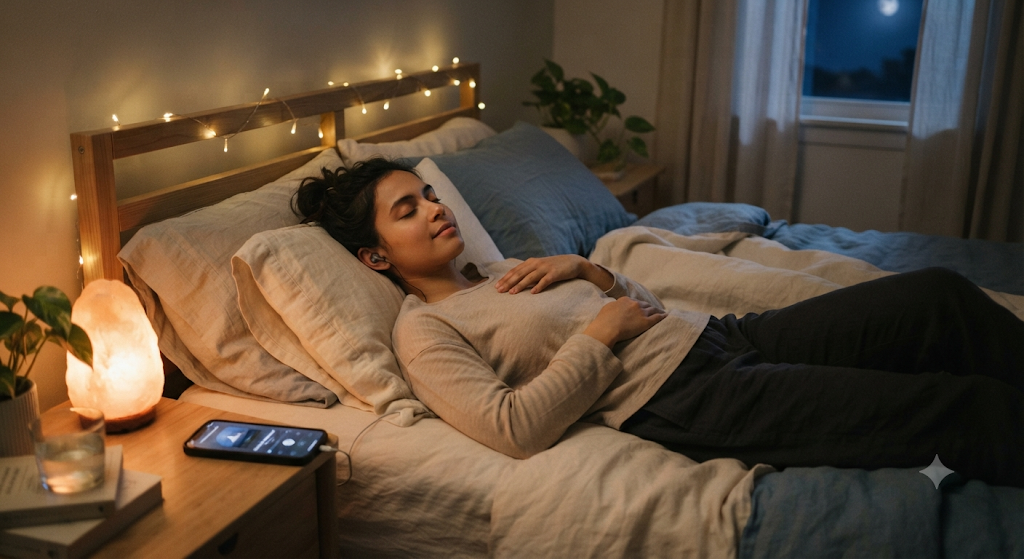
Guided meditation is one of the easiest ways to start meditating before sleep, particularly if you are a beginner.
In this technique, a meditation instructor or recorded audio guides you through relaxation exercises. The instructions may involve breathing, body awareness, peaceful imagery, and positive suggestions.
You do not have to remember complicated steps or control your thoughts. Simply listen to the instructions and follow them at your own pace.
How to Practice Guided Sleep Meditation:
- Find a comfortable and quiet place in your bedroom.
- Turn off unnecessary lights and reduce distractions.
- Lie down or sit comfortably on your bed.
- Play a gentle guided sleep meditation recording at a low volume.
- Close your eyes and focus on the instructor’s voice.
- Follow the breathing and relaxation instructions.
- Allow your body to relax without trying to force sleep.
Duration: 10–20 minutes.
Benefits:
- Makes meditation easier for beginners.
- Provides a structured relaxation experience.
- Helps redirect attention from everyday worries.
- Encourages a consistent bedtime routine.
2. Mindfulness Meditation
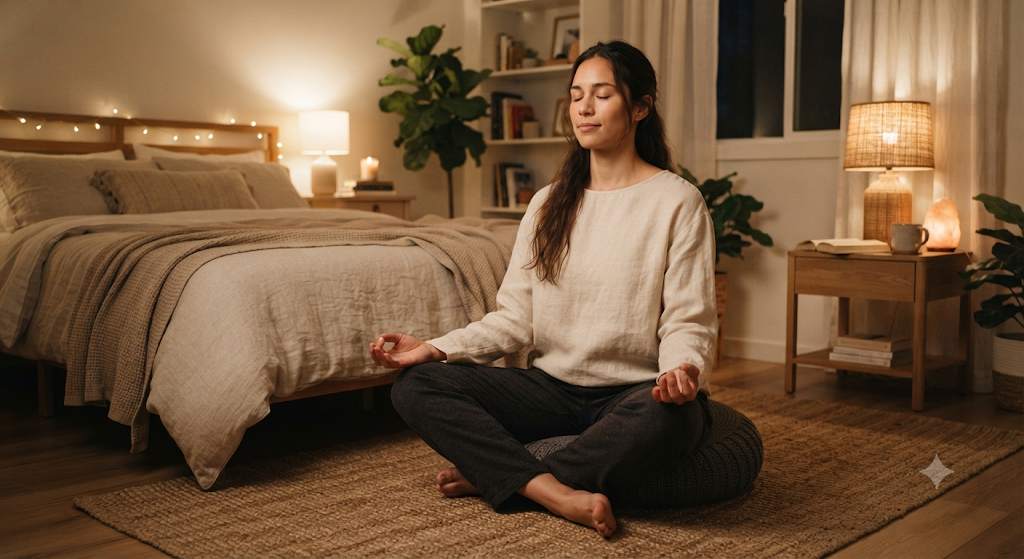
Mindfulness meditation involves paying attention to the present moment without judging your thoughts, feelings, or physical sensations.
It is particularly useful when your mind feels busy at bedtime. Instead of trying to stop your thoughts, you learn to observe them and gently return your attention to your breathing.
How to Practice Mindfulness Meditation Before Sleep:
- Sit or lie down in a comfortable position.
- Close your eyes or keep your gaze softly lowered.
- Notice the natural rhythm of your breathing.
- Pay attention to the feeling of air entering and leaving your body.
- When thoughts appear, acknowledge them without criticism.
- Gently bring your attention back to your breathing.
- Continue observing your thoughts and sensations calmly.
Duration: 5–15 minutes.
Benefits:
- Develops awareness of the present moment.
- Helps you respond differently to stressful thoughts.
- May support emotional relaxation.
- Encourages a more mindful bedtime routine.
3. Deep Breathing Meditation
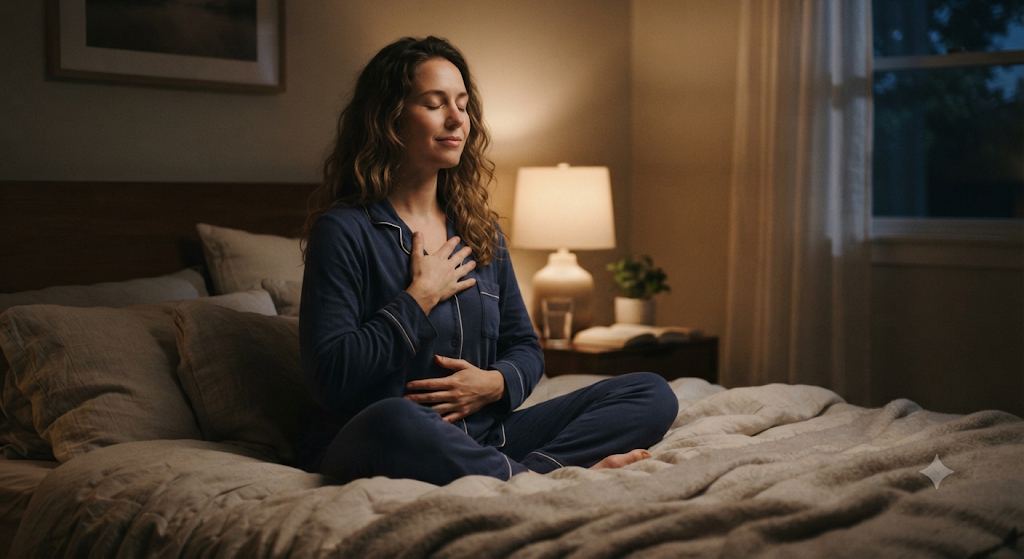
Deep breathing meditation focuses on slow, comfortable breathing to help your body and mind relax.
When you spend time breathing slowly and naturally, you can shift your attention away from stressful thoughts and become more aware of your body.
How to Practice Deep Breathing Meditation:
- Lie comfortably on your back or sit with your spine supported.
- Place one hand on your abdomen if that feels comfortable.
- Inhale gently through your nose.
- Notice your abdomen expanding naturally.
- Exhale slowly without forcing the breath.
- Continue breathing at a comfortable pace.
- Allow your shoulders, jaw, and facial muscles to relax.
Duration: 5–10 minutes.
Benefits:
- Encourages physical relaxation.
- Helps develop awareness of breathing.
- Provides a simple way to unwind before bed.
- Can be practiced without any equipment.
Avoid forcing very deep breaths or holding your breath for long periods. If you feel dizzy or uncomfortable, return to normal breathing.
4. Body Scan Meditation

Body scan meditation is a relaxation technique in which you gradually direct your attention toward different parts of your body.
It helps you notice areas where you may be holding tension, such as your shoulders, neck, back, hands, or legs.
How to Practice Body Scan Meditation:
- Lie comfortably on your back with your arms resting naturally.
- Close your eyes and take a few comfortable breaths.
- Bring your attention to your toes and feet.
- Slowly move your awareness toward your ankles and calves.
- Notice your knees, thighs, and hips.
- Gradually focus on your abdomen, chest, and back.
- Relax your shoulders, arms, hands, and fingers.
- Finally, bring your attention to your neck, face, and forehead.
- Notice your entire body resting comfortably.
Duration: 10–20 minutes.
Benefits:
- Develops body awareness.
- Helps identify areas of physical tension.
- Encourages relaxation from head to toe.
- Can be performed while lying in bed.
5. Progressive Muscle Relaxation
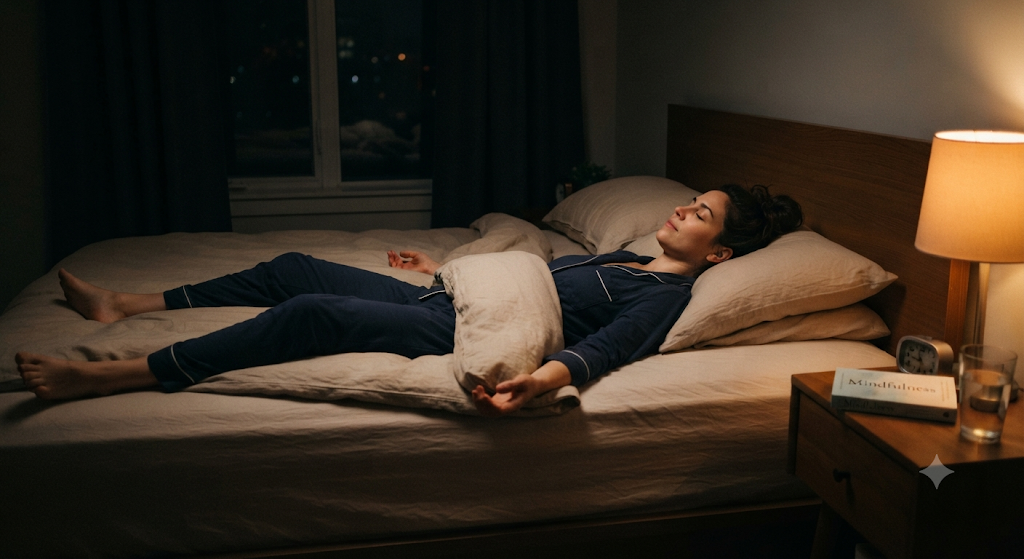
Progressive muscle relaxation is a technique that involves gently tensing and then releasing different muscle groups.
It helps you recognize the difference between muscle tension and relaxation. It can be particularly useful if you feel physically tense after a long day.
How to Practice Progressive Muscle Relaxation:
- Lie down comfortably in a quiet room.
- Begin by focusing on your feet.
- Gently tense the muscles in your feet for a few seconds.
- Release the tension and notice the relaxed feeling.
- Move gradually to your calves, thighs, abdomen, hands, arms, shoulders, and face.
- Tense each muscle group gently and release it.
- Finish by relaxing your entire body.
Duration: 10–15 minutes.
Benefits:
- Helps reduce awareness of unnecessary muscle tension.
- Encourages physical relaxation.
- Develops awareness of bodily sensations.
- Provides a structured bedtime relaxation exercise.
Do not tense muscles forcefully. Skip any area that is painful, injured, or uncomfortable.
6. Visualization Meditation
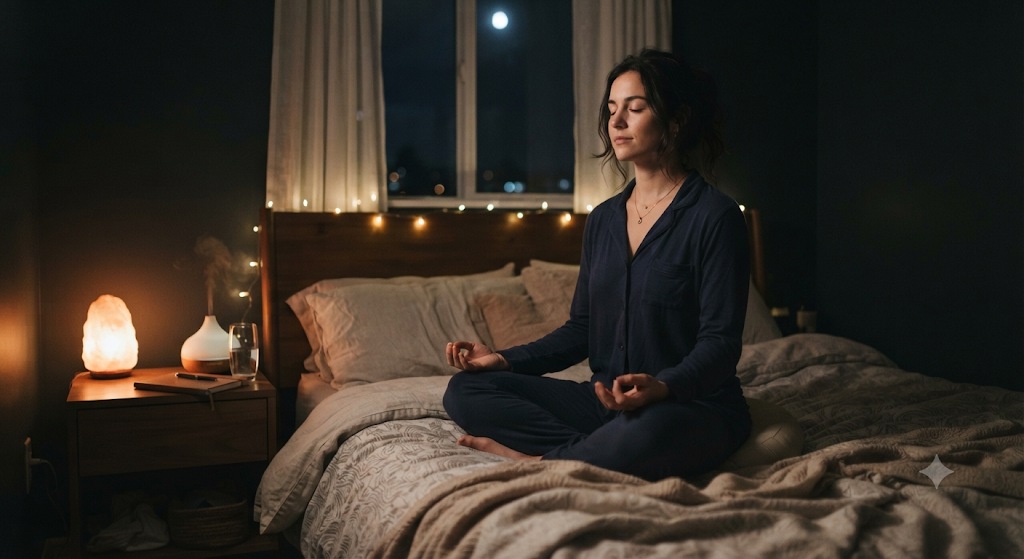
Visualization meditation involves imagining a peaceful environment or pleasant experience. It allows you to focus on calming mental images instead of repeatedly thinking about daily problems.
You can imagine a quiet beach, a green forest, a peaceful mountain, or any place where you feel comfortable.
How to Practice Visualization Meditation:
- Lie down or sit in a relaxed position.
- Close your eyes and breathe comfortably.
- Imagine yourself in a peaceful natural setting.
- Visualize the surroundings in detail.
- Notice the colors, sounds, temperature, and atmosphere.
- Imagine yourself feeling safe and relaxed in that environment.
- Continue focusing on the peaceful scene for several minutes.
Duration: 5–15 minutes.
Benefits:
- Encourages positive mental imagery.
- Helps redirect attention from daily stress.
- Creates a calming bedtime experience.
- Can be adapted according to personal preferences.
7. Loving-Kindness Meditation (Metta Meditation)
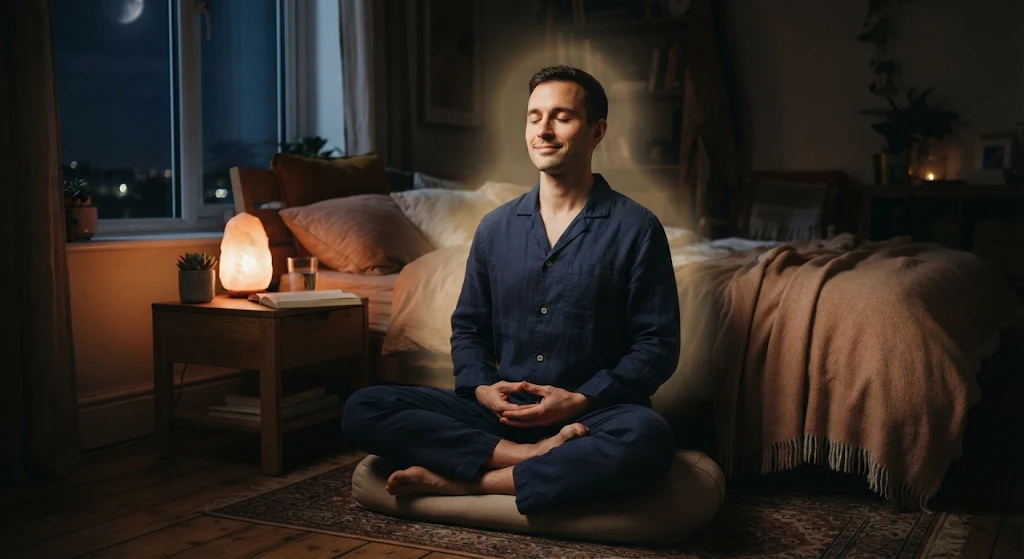
Loving-kindness meditation, traditionally known as Metta meditation, focuses on developing feelings of kindness, compassion, and goodwill toward yourself and others.
It can be a meaningful way to end the day, particularly if you are experiencing frustration, negative emotions, or interpersonal stress.
How to Practice Loving-Kindness Meditation:
- Sit or lie down comfortably.
- Close your eyes and take a few gentle breaths.
- Bring your attention to yourself.
- Silently repeat phrases such as:
- May I be peaceful.
- May I be healthy.
- May I feel safe.
- May I be happy.
- Gradually extend these wishes to your loved ones.
- If comfortable, extend the same feelings of goodwill toward other people.
- Finish by resting quietly for a few moments.
Duration: 5–10 minutes.
Benefits:
- Encourages compassion and kindness.
- Supports emotional awareness.
- Provides an opportunity for positive reflection.
- Can help create a peaceful end-of-day ritual.
8. Mantra Meditation
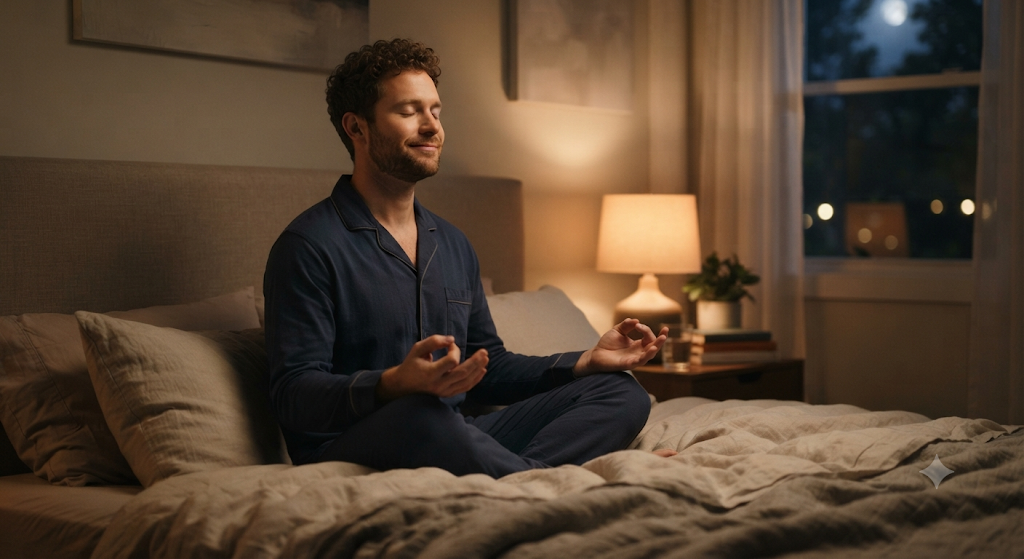
Mantra meditation involves repeating a word, sound, or meaningful phrase to help maintain attention.
The repetition provides a simple point of focus and may help reduce distractions during your bedtime meditation.
How to Practice Mantra Meditation:
- Find a comfortable sitting or lying position.
- Close your eyes and relax your body.
- Choose a simple mantra, such as “Om,” “Shanti,” or “I am calm.”
- Repeat the mantra silently or softly.
- Coordinate the repetition with your natural breathing if comfortable.
- If your mind wanders, gently return to the mantra.
- Continue for a few minutes.
Duration: 5–10 minutes.
Benefits:
- Provides a simple focus for meditation.
- Encourages mental concentration.
- Can become a calming bedtime ritual.
- Requires no special equipment.
9. Yoga Nidra (Yogic Sleep Meditation)
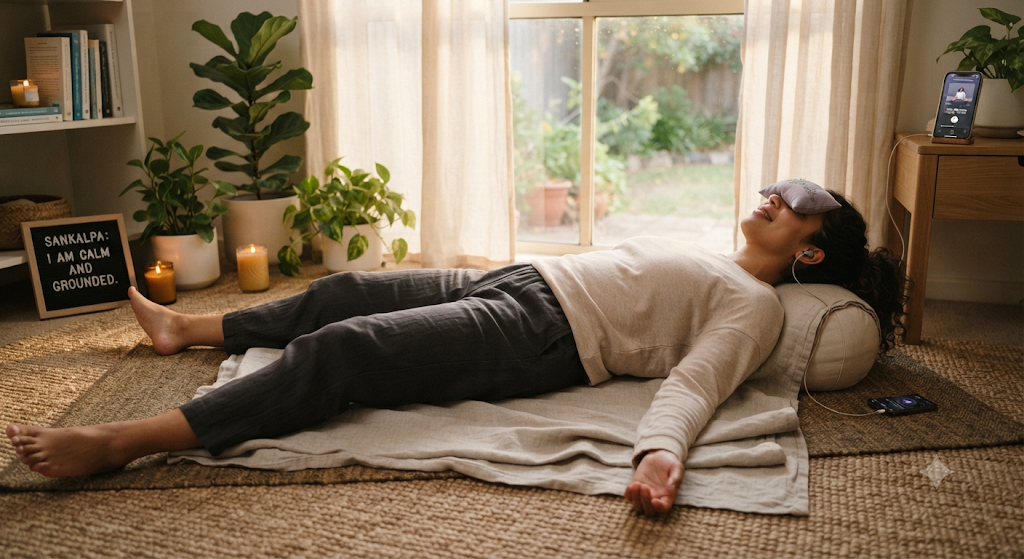
Yoga Nidra is a guided relaxation practice traditionally associated with yogic traditions. It is often performed while lying comfortably in Shavasana (Corpse Pose).
The practice typically involves guided awareness of different body parts, breath awareness, and visualization.
Although it is commonly called yogic sleep, Yoga Nidra is not exactly the same as ordinary sleep. It is a guided relaxation practice in which you remain aware of the instructions as much as possible.
How to Practice Yoga Nidra Before Sleep:
- Lie comfortably on your back.
- Place your arms beside your body with your palms facing upward.
- Keep your legs comfortably apart.
- Close your eyes and relax your body.
- Follow a guided Yoga Nidra recording.
- Bring your awareness to different body parts as instructed.
- Observe your breathing without trying to change it.
- Allow yourself to rest peacefully.
Duration: 15–30 minutes.
Benefits:
- Encourages deep physical relaxation.
- Develops body awareness.
- Provides a structured relaxation practice.
- Helps establish a peaceful evening routine.
10. Gratitude Meditation
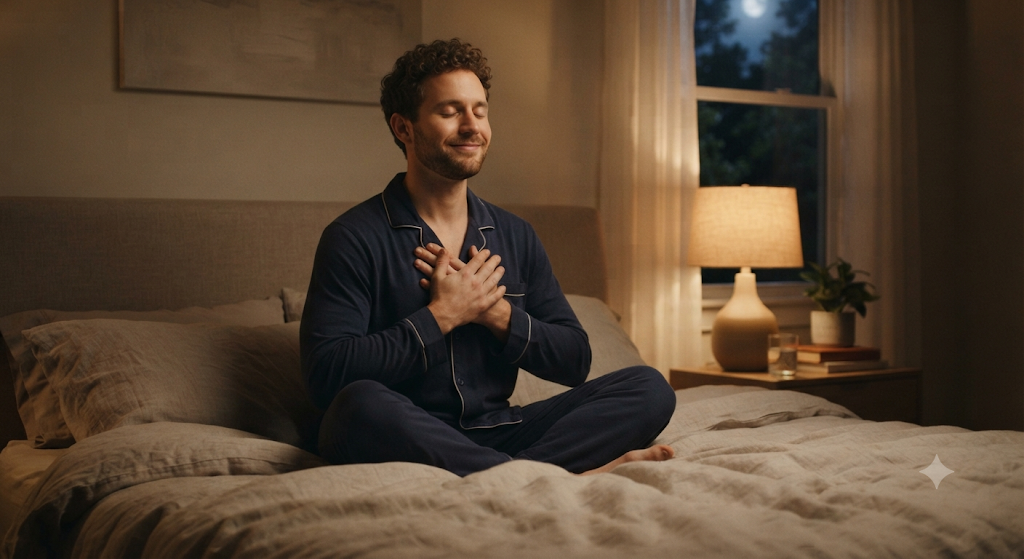
Gratitude meditation involves reflecting on positive experiences and things you appreciate in your life.
It can be a simple way to finish your day with a calmer and more balanced mindset.
How to Practice Gratitude Meditation:
- Sit comfortably or lie down in bed.
- Close your eyes and take a few relaxed breaths.
- Think about three things you appreciated during the day.
- Reflect on small positive experiences, conversations, or achievements.
- Notice the feelings associated with those experiences.
- Silently express gratitude for them.
- Finish with a few moments of quiet breathing.
Duration: 5–10 minutes.
Benefits:
- Encourages positive reflection.
- Develops awareness of everyday experiences.
- Provides a gentle way to end the day.
- Can become part of a healthy nighttime routine.
(Also Read: Steps, Precaution And Benefits of Linga Mudra)
10-Minute Meditation Before Sleep: Step-by-Step Routine
If you are new to bedtime meditation, you do not need to practice all ten techniques. You can combine simple breathing, mindfulness, and body relaxation into one short routine.
Here is a beginner-friendly 10-minute sleep meditation routine.
| Time | Meditation Activity | What to Do |
|---|---|---|
| 1 minute | Settle down | Find a comfortable position and close your eyes |
| 2 minutes | Deep breathing | Breathe slowly and comfortably |
| 2 minutes | Body awareness | Notice and relax your shoulders, hands, and legs |
| 2 minutes | Mindfulness | Observe your thoughts without judging them |
| 2 minutes | Visualization | Imagine a peaceful natural setting |
| 1 minute | Quiet relaxation | Let go of the exercise and rest comfortably |
Step 1: Prepare Your Sleeping Environment
Choose a quiet, comfortable place where you can relax without interruptions. Dim the lights, silence unnecessary notifications, and adjust the room temperature to your comfort.
Step 2: Find a Comfortable Position
You can sit on a cushion, rest against a headboard, or lie down on your bed. Keep your body relaxed and avoid positions that create discomfort.
Step 3: Focus on Your Breathing
Notice how your breath enters and leaves your body. Allow your breathing to become comfortable and natural.
Step 4: Relax Your Body
Bring your attention to your shoulders, jaw, hands, stomach, and legs. Notice areas of tension and allow them to soften.
Step 5: Observe Your Thoughts
Thoughts about work, family, responsibilities, or the next day may appear. Do not try to fight them. Simply acknowledge them and return your attention to your breathing.
Step 6: Visualize a Peaceful Place
Imagine yourself sitting beside a quiet lake, walking through a forest, or relaxing on a peaceful beach. Focus on the comforting details of the scene.
Step 7: Allow Yourself to Rest
When the meditation is complete, do not immediately reach for your phone or start thinking about tomorrow’s tasks. Give yourself a few moments to rest quietly.
If you are already lying in bed and feel sleepy, you can simply allow yourself to fall asleep naturally.
Benefits of Meditation Before Sleep
Regular meditation before bedtime may support relaxation, emotional well-being, and healthy sleep habits. The benefits can vary depending on the meditation technique and individual circumstances.
1. Helps Calm an Overactive Mind
Many people experience increased thinking and worrying when they lie down at night. Meditation provides a way to redirect attention toward breathing and present-moment awareness.
Rather than trying to eliminate thoughts, you learn to observe them without becoming overly involved.
2. May Improve Sleep Quality
Some research suggests that mindfulness meditation may improve self-reported sleep quality in certain groups of people.
A relaxing bedtime routine may also make it easier to transition from daily activities to rest.
However, evidence is mixed, and meditation should not be presented as a guaranteed treatment for chronic insomnia.
3. Encourages Stress Reduction
Stress can make it difficult to relax at bedtime. Meditation and mindfulness effectiveness encourages you to slow down, become aware of your emotions, and practice responding to stressful thoughts more calmly.
4. Helps Release Physical Tension
Techniques such as body scan meditation and progressive muscle relaxation encourage awareness of tight muscles.
They can help you recognize and gradually release physical tension accumulated during the day.
5. Supports Emotional Well-Being
Mindfulness and loving-kindness meditation encourage awareness, compassion, and emotional balance.
Practicing these techniques may help you develop a healthier way of responding to everyday challenges.
6. Develops a Consistent Bedtime Routine
Performing meditation at approximately the same time every evening can become a relaxing habit.
A consistent bedtime routine can help you prepare mentally and physically for sleep.
7. Encourages Better Self-Awareness
Meditation allows you to observe your thoughts, feelings, and physical sensations without immediately reacting to them.
This awareness can help you identify stress patterns and understand what makes it difficult for you to relax.
Best Time to Meditate Before Sleep
The best time to practice meditation before sleep depends on your schedule and personal preferences.
Many people find it convenient to meditate approximately 15–30 minutes before going to bed. Others prefer practicing immediately after completing their nighttime routine.
Here are some options:
- 30 minutes before bedtime: Practice a longer guided meditation or Yoga Nidra session.
- 15 minutes before bedtime: Try body scan meditation or mindfulness.
- 5 minutes before bedtime: Practice gentle breathing or gratitude meditation.
- Immediately before sleep: Use a short relaxation exercise while lying comfortably in bed.
You do not have to follow a strict schedule. The important thing is to choose a time when you can practice without distractions.
Tips for Beginners Practicing Meditation Before Sleep
Starting meditation does not require perfect concentration or complete silence. It is normal for your mind to wander, especially when you are learning a new technique.
Follow these tips to make your bedtime meditation practice easier:
Start with Short Sessions
Begin with 5 minutes of meditation instead of trying to practice for 30 minutes immediately. Increase the duration gradually as you become comfortable.
Choose a Technique You Enjoy
Some people prefer guided meditation, while others enjoy silent mindfulness or breathing exercises. Experiment with different techniques to find what feels comfortable.
Avoid Forcing Sleep
Do not treat meditation as a task that must make you fall asleep within a particular time. Focus on relaxation rather than achieving a specific result.
Practice Consistently
Try to meditate at approximately the same time every evening. A regular routine can make it easier to develop a lasting habit.
Reduce Distractions
Keep your phone away from your sleeping area when possible. If you use a meditation recording, choose the audio in advance and turn off or dim the screen.
Wear Comfortable Clothing
Tight or uncomfortable clothing can distract you during meditation. Choose loose clothing that allows you to relax.
Be Patient with Your Thoughts
Your mind will naturally wander. Instead of becoming frustrated, gently return your attention to your chosen point of focus.
(Also Read: 11 Miraculous Benefits Of Meditation)
Common Mistakes to Avoid During Bedtime Meditation
Although meditation is generally considered a low-risk practice for most people, some common mistakes can make it less comfortable or effective.
Trying to stop all thoughts: Meditation does not require an empty mind. The goal is to observe thoughts without judging them.
Forcing deep breathing: Breathing should remain comfortable. Very deep or rapid breathing may cause dizziness or discomfort.
Expecting immediate results: Some people notice relaxation quickly, while others need time to become comfortable with meditation.
Using bright screens: Watching videos or scrolling through a phone immediately before bedtime may interfere with a relaxing nighttime environment.
Choosing an uncomfortable position: Sitting or lying in an uncomfortable position can distract you. Use pillows or cushions for support.
Practicing for too long initially: Long sessions may feel difficult for beginners. Start small and increase the duration gradually.
Meditation Before Sleep vs. Morning Meditation
Meditation can be practiced at different times of the day. However, morning meditation and bedtime meditation may serve different personal goals.
| Comparison | Morning Meditation | Meditation Before Sleep |
|---|---|---|
| Main purpose | Prepare the mind for the day | Unwind after daily activities |
| Common techniques | Mindfulness, breathing, mantra meditation | Body scan, guided meditation, Yoga Nidra |
| Energy level | May promote alertness and focus | Usually emphasizes relaxation |
| Duration | 5–20 minutes | 5–30 minutes |
| Best environment | Quiet, comfortable space | Dim, peaceful bedroom |
| Main focus | Awareness and mental preparation | Relaxation and bedtime preparation |
Neither time is universally better. You can practice both if they fit comfortably into your lifestyle.
How to Improve Sleep Along with Meditation
Meditation can be one part of a healthy sleep routine. Combining it with good sleep habits may make your nighttime routine more effective.
Consider following these practices:
- Maintain a consistent sleep schedule: Try to go to bed and wake up at approximately the same time every day.
- Limit caffeine in the evening: Avoid coffee, strong tea, and other caffeinated beverages close to bedtime.
- Reduce screen exposure: Put away phones, tablets, and computers before going to bed.
- Create a comfortable bedroom: Keep your sleeping environment quiet, dark, and comfortably cool.
- Avoid heavy meals late at night: Large meals immediately before bedtime may cause discomfort.
- Get regular physical activity: Include appropriate exercise during the day.
- Spend time outdoors: Natural daylight exposure during the day can support a healthy sleep-wake cycle.
- Develop a relaxing nighttime routine: Combine meditation with reading, gentle stretching, or a warm bath.
Remember that sleep habits are individual. Find a routine that is realistic and comfortable for you.
Is Meditation Before Sleep Safe?
Meditation is generally considered safe for most healthy people when practiced comfortably. Gentle mindfulness, breathing exercises, and guided relaxation are common bedtime practices.
However, meditation does not always feel relaxing for everyone. Some individuals may experience increased anxiety, uncomfortable emotions, intrusive thoughts, or distress during certain practices.
If this happens, stop the exercise and try a gentler approach. You can keep your eyes open, focus on external sounds, or practice a short grounding exercise instead.
People with a history of significant psychological distress or certain medical conditions may benefit from professional guidance before beginning intensive meditation practices.
If you experience persistent difficulty falling asleep, frequent nighttime waking, loud snoring, breathing interruptions during sleep, or excessive daytime sleepiness, consult a qualified healthcare professional.
For chronic insomnia, Cognitive Behavioral Therapy for Insomnia (CBT-I) is an evidence-based treatment and should not be replaced by meditation.
Conclusion
Practicing meditation before sleep can be a simple and meaningful way to unwind after a busy day. Techniques such as guided sleep meditation, mindfulness, deep breathing, body scan meditation, and Yoga Nidra can help you focus on relaxation and develop a healthier bedtime routine.
You do not need to meditate for hours or completely silence your thoughts to benefit from the practice. Start with just five minutes, choose a comfortable technique, and gradually develop a consistent nighttime habit.
Remember that meditation is a supportive relaxation practice rather than a guaranteed cure for sleep disorders. Combine it with healthy sleep habits and seek professional guidance if sleep difficulties continue. With patience and regular practice, bedtime meditation can become a peaceful part of your everyday life.
FAQs:
Q. Is meditation before sleep good for you?
A. Meditation before sleep can be a useful relaxation practice. It may help you manage stressful thoughts, become more aware of your breathing, and develop a calming bedtime routine. Some research also suggests potential improvements in self-reported sleep quality.
Q. How long should I meditate before sleeping?
A. Beginners can start with 5–10 minutes of meditation before bedtime. As they become comfortable, they can gradually increase the duration to 15–20 minutes or longer.
Q. Which meditation is best before sleep?
A. Guided sleep meditation, mindfulness meditation, body scan meditation, progressive muscle relaxation, and Yoga Nidra are popular bedtime practices. The best option depends on your comfort and personal preferences.
Q. Can meditation help me fall asleep faster?
A. Meditation may help some people relax and prepare for sleep by reducing mental distractions and physical tension. However, it does not guarantee faster sleep onset, and individual results vary.
Q. Can I meditate while lying in bed?
A. Yes. You can practice mindfulness, body scan meditation, guided meditation, or gentle breathing while lying in bed. Choose a comfortable position that allows you to relax without straining your body.
6. Is guided meditation better than silent meditation for sleep?
Neither technique is universally better. Guided meditation may be easier for beginners because it provides instructions, while silent meditation allows you to focus independently on your breathing and bodily sensations.
Q. Can meditation reduce anxiety at night?
A. Meditation may help some people manage stress and anxiety by encouraging present-moment awareness and relaxation. However, persistent or severe anxiety may require professional mental health support.
Q. Should I meditate before or after brushing my teeth?
A. You can meditate either before or after brushing your teeth. Many people prefer completing their nighttime hygiene routine first so they can relax without needing to get out of bed again.
Q. Can I listen to music during sleep meditation?
A. Yes. Soft instrumental music, nature sounds, or gentle guided meditation audio may help create a relaxing atmosphere. Choose comfortable volume levels and avoid music that distracts you.
Q. Is Yoga Nidra the same as sleep meditation?
A. No. Yoga Nidra is a guided yogic relaxation practice that involves body awareness, breathing, and visualization. Sleep meditation is a broader term that includes several relaxation and mindfulness techniques. Yoga Nidra can be used as one form of bedtime meditation.
Q. Can I meditate every night before sleeping?
A. Yes. Many people practice gentle meditation every night as part of their bedtime routine. Start with a short session and choose techniques that feel comfortable.
Q. What should I do if my mind keeps wandering during meditation?
A. Mind wandering is normal. When you notice that your attention has moved away from your breathing or meditation instructions, gently bring it back. You do not need to criticize yourself or force your mind to remain completely quiet.

You May Also Like

Meditation for Beginners: Ho ...
15 August 2026

Steps, Precaution And Benefi ...
15 November 2023

Shambhavi Mahamudra: The Pow ...
17 March 2021
About Us
upashanayoga.com is the home of yoga. Here in upashanayoga.com we describe a lot of about yoga you never ever knew about.


Leave a Comment